What Is an Entity? Understanding Entity Meaning in SEO
Entity-based SEO has emerged as one of the most transformative approaches in modern search optimisation, surpassing the boundaries of traditional Keyword-Based SEO. As Google continues to strengthen its Knowledge Graph and semantic understanding capabilities, the ability to optimise for entity SEO (rather than relying solely on keywords) has become a decisive factor in ranking performance, topical authority, and long-term visibility.
This scientific, structured, and context-driven approach helps Google recognise the meaning of your content through entities, relationships, attributes, and semantic signals. As a result, mastering Entity Search in SEO is no longer optional; it is essential for sustainable search performance.
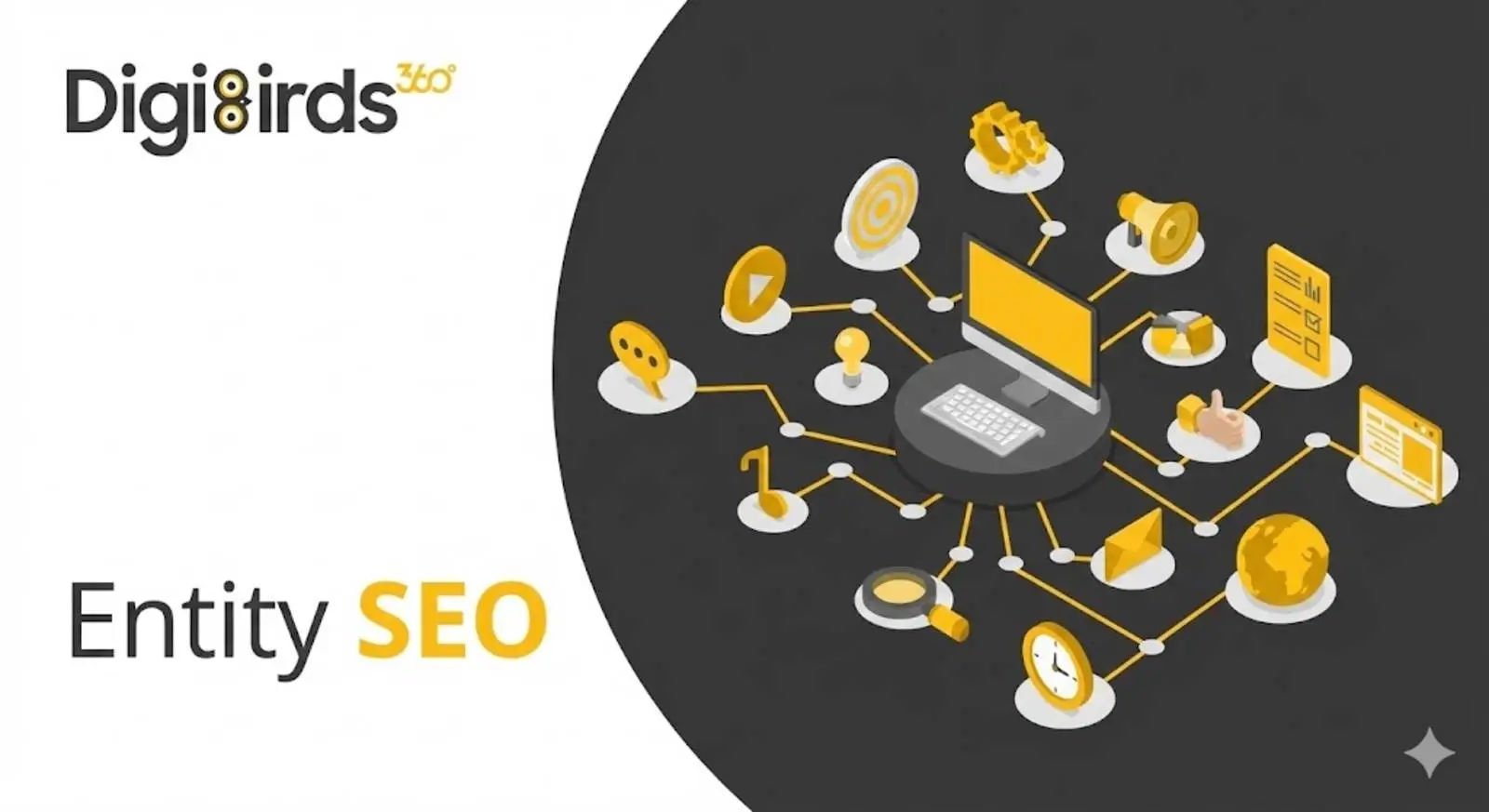
In simple terms, an entity is a unique, identifiable object (such as a person, place, concept, organisation, or idea) defined by:
- A distinct name
- Type or category
- Attributes
- Relationships with other entities
For example:
- “Apple Inc.” (organisation)
- “Mahatma Gandhi” (person)
- “Photosynthesis” (concept)
- “SEO” (topic)
Entities are catalogued in major databases, including Wikidata, DBpedia, YAGO, and Google’s Knowledge Graph. When optimising for Entity-based SEO, your goal is to help Google accurately connect your content with these entity databases to improve clarity, relevance, and semantic meaning.
Boost your local visibility with DigiBirds360. Get Started with our Specialised SEO Services today.
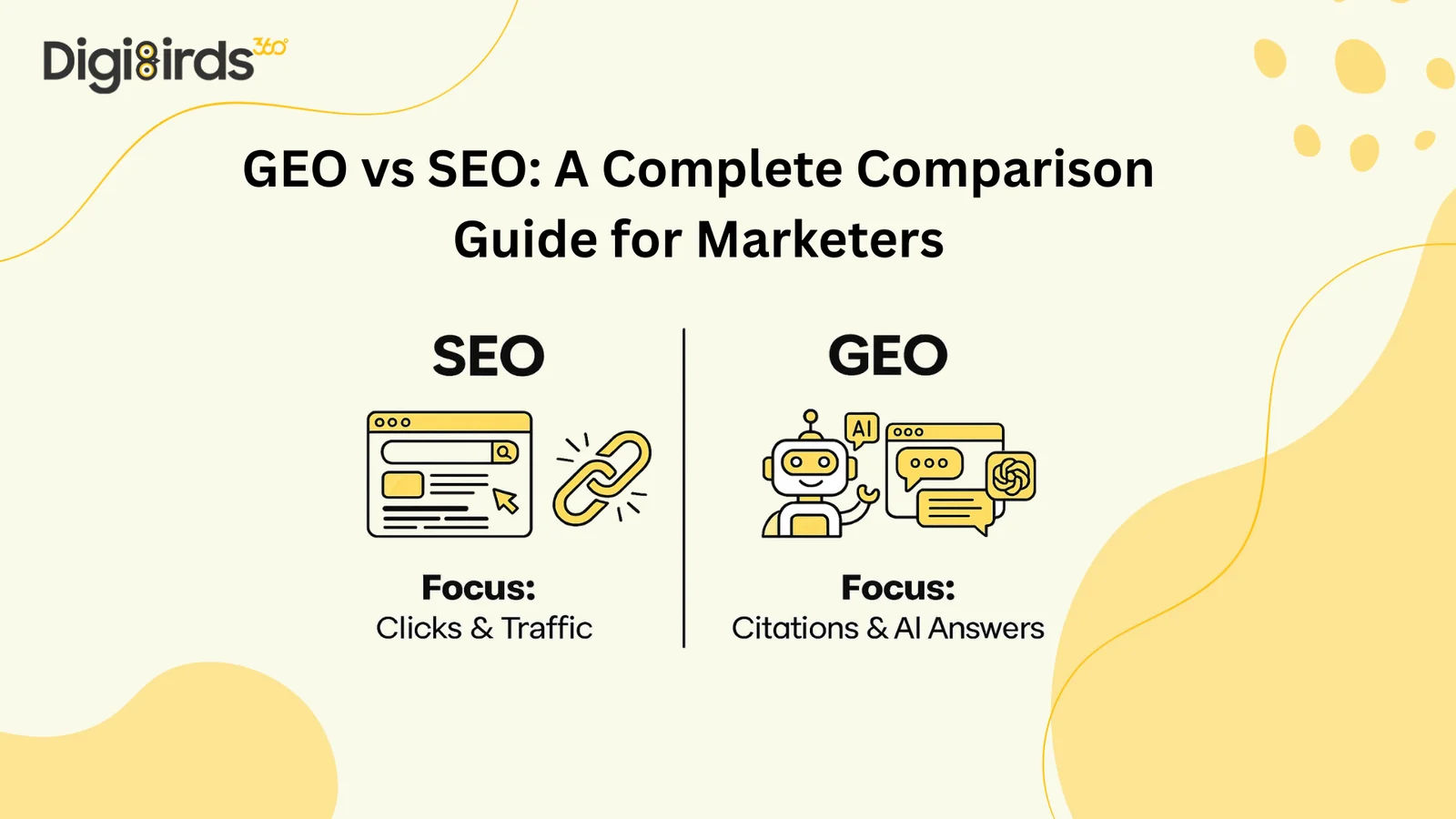
Entity-Based SEO vs Keyword-Based SEO
While Keyword-Based SEO remains useful, it fails to provide the semantic clarity required by modern algorithms. Google no longer ranks pages solely based on matching strings of text; instead, it assesses how well a content piece fits into a broader knowledge framework.
Entity-based SEO enhances this framework by:
- Establishing recognisable entities in content.
- Strengthening semantic connections.
- Reducing ambiguity and improving topical relevance.
- Creating a structured context that search engines can easily interpret.
This shift is why brands increasingly rely on Semantic SEO, which connects keywords, topics, and entities into a cohesive understanding.
How Google Identifies Entities
Google leverages multiple data sources to recognise entities, including:
- Wikipedia
- Wikidata
- Freebase (historically)
- Schema.org structured data
- Search behaviour and user interactions
- Web content classified through NLP and machine learning
When your content is contextually rich, structured, and supported by authoritative references, Google is more likely to treat your page as an entity-rich source.
Key Strategies to Optimise for Entity SEO
Entity SEO focuses on improving your website’s relevance, clarity, and authority by helping search engines understand the relationships between concepts, brands, and topics. By strengthening entity signals, you enhance topical depth, increase semantic visibility, and improve your chances of ranking for broader keyword clusters.
The strategies below outline the most effective ways to build a strong entity-driven optimisation framework:
1. Identify the Core Entity and Supporting Entities
Begin every piece of content by identifying:
- Primary entity (the main topic)
- Secondary entities (related concepts)
- Entity attributes (features, characteristics, relationships)
Using an SEO entity tool such as Google NLP API, InLinks, or Clearscope helps reveal your entity gaps and opportunities.
2. Use Semantic SEO Techniques to Strengthen Context
To optimise for Semantic SEO, ensure your content includes:
- Clear definitions of the main entity
- Contextually relevant terms
- Attribute-based explanations
- Highly related subtopics
- Examples, variations, and synonyms
This reduces ambiguity and improves entity recognition accuracy.
3. Structure Content Like a Knowledge Source
Entity-focused content mirrors the structure used by trusted knowledge bases such as Wikipedia:
- Clear introductory definition
- Comprehensive attribute list
- Sections addressing each sub-topic
- Internal linking to related entities
- Consistent terminology
- Hierarchical headings for clarity
This approach makes it easy for search engines to process and map your content.
Discover how DigiBirds 360 empowers brands with powerful SEO Services. Learn more about who we are.
4. Implement Entity SEO Schema (Structured Data)
Schema markup is one of the most powerful tools for Entity-based SEO. Use structured data types such as:
- Article
- FAQPage
- Organization
- Person
- Product
- LocalBusiness
- Thing
Schema creates explicit relationships and gives Google machine-readable clarity, improving entity linking and disambiguation.
5. Strengthen Entity Association SEO Across Your Website
Entity associations help Google understand your authority on a topic by evaluating:
- Topical clustering
- Internal linking structure
- Co-occurrence of related entities
- Cross-page semantic consistency
- External referencing and citations
A strong entity association network improves your website’s identity as an authority in a specific domain.
6. Improve Disambiguation Through High-Quality Content
Ambiguous terms confuse search engines. Use precise writing to ensure Google understands your intended meaning by:
- Using synonyms consistently linked to the same entity
- Avoiding multi-topic content on one page
- Creating clear, context-driven explanations
- Separating entities that share similar names
Accurate disambiguation is a key factor in successful entity-based search performance.
Why Entity-Based SEO Matters Today
Entity-based SEO has become a foundational approach in modern search optimisation. By aligning your content with Google’s Knowledge Graph and semantic understanding, you build stronger authority, improved discoverability, and long-term search resilience.
1. Search Engines Now Prioritise Meaning Over Keywords: Modern search algorithms use NLP (Natural Language Processing), semantic analysis, and machine learning. Entities help Google interpret intent, even when no exact keywords match.
2. Stronger Topical Authority and Trust Signals: By building consistent entity presence and associations (known as Entity Association SEO), your website becomes a reliable reference point for a topic cluster.
3. Improved Rankings Across Multiple Queries: When your content aligns with Google’s entity understanding, it naturally ranks for long-tail, contextual, and concept-related searches.
4. Essential for Multimodal and AI-Powered Search: AI-driven search systems such as SGE, Gemini, and GPT-based retrieval models rely heavily on entity mapping and semantic understanding, not keyword repetition.
Role of Semantic SEO in Entity-Based SEO
Semantic SEO enhances meaning rather than targeting keywords alone. It ensures that content aligns with human comprehension, natural language patterns, and machine-learning interpretation.
Through semantic mapping, you can improve:
- Conceptual relevance
- Query interpretation
- Topical completeness
- Contextual depth
This holistic approach strengthens entity-based search rankings and increases the likelihood of appearing in rich results.
Best Practices to Optimise Content for Entity Search Engines
To succeed in an entity search engine environment, implement the following practices:
1. Create Topic Clusters: Build interconnected articles around a core entity, linking subtopics to the main page.
2. Strengthen Interlinking: Internal links help search engines understand entity hierarchy and relationships.
3. Maintain Consistent Branding: Uniform naming ensures that a brand is recognised as a single entity across multiple sources.
4. Offer Unique, Value-Rich Information: Search engines recognise fresh insights and reward pages that enrich entity knowledge.
Have Questions? Contact DigiBirds360 and Speak to a Digital Growth Specialist Today!
Conclusion
As search evolves, Entity-based SEO is becoming the foundation of visibility, relevance, and authority. By focusing on entity relationships, semantic clarity, structured data, and contextual depth, businesses can outperform traditional Keyword-Based SEO strategies and align themselves with Google’s Knowledge Graph.
With the right use of entity-based search, Entity SEO Schema, and reliable Seo entity tool insights, brands can build long-term search authority and future-proof their online presence.