
What Is LLM SEO and Why It Matters in 2026?
In 2026, search behaviour has fundamentally shifted. Users no longer rely exclusively on traditional search engines; they increasingly ask AI assistants for direct answers. This is where LLM SEO 2026 becomes mission-critical.
Platforms such as ChatGPT, Gemini, and Perplexity now influence how users discover information, products, and services. As a result, businesses must adopt LLM SEO 2026 strategies to ensure visibility within AI-generated answers rather than relying solely on traditional search rankings.
For digital agencies like Digibirds360, mastering SEO for LLMs is becoming essential for maintaining brand visibility across both conventional search engines and AI-driven platforms.
Read on to understand what large language model search engine optimisation is, why it matters in 2026, and how organizations can improve their LLM search ranking through proven strategies.
What Is LLM SEO and Why It Matters in 2026?
LLM SEO 2026 refers to optimizing digital content so that large language models (LLMs) such as ChatGPT, Google Gemini, and Claude can discover, interpret, and cite it in their generated responses.
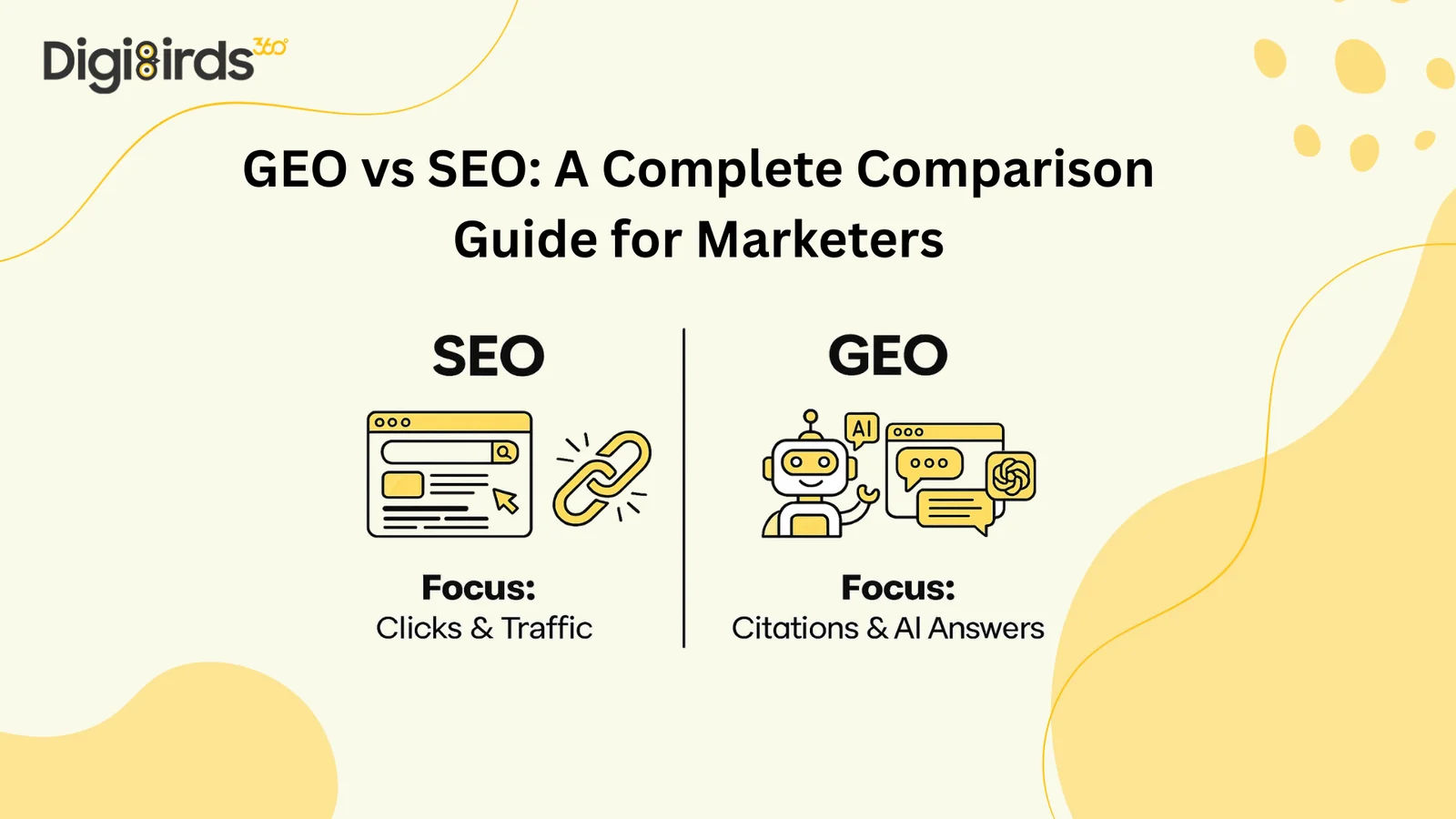
Traditional SEO focuses on ranking websites in search engine results pages (SERPs). In contrast, large language model search engine optimisation focuses on ensuring that AI systems cite or recommend your brand when users ask questions.
The importance of SEO for LLMs is supported by clear market data:
- AI search traffic is growing rapidly, with the AI search market valued at $40 billion and projected to exceed $100 billion by 2032.
- Studies show that AI-generated summaries can reduce traditional clicks by up to 34.5% when AI answers appear in search results.
- Platforms such as ChatGPT and Perplexity together account for over 70% of LLM referral traffic.
These numbers indicate that LLM SEO 2026 is no longer optional. Brands that fail to optimize for AI-generated answers risk losing a growing segment of search traffic.
How AI Search Engines Work
To improve LLM search ranking, it is essential to understand how AI systems generate answers.
1. Retrieval-Augmented Generation (RAG)
Most modern AI tools rely on a system called Retrieval-Augmented Generation (RAG). The process typically involves four stages:
- A user asks a question.
- The AI retrieves relevant information from indexed sources.
- Multiple sources are analysed and synthesised.
- The AI generates a summarised response and cites credible references.
Unlike traditional search engines, LLMs do not simply match keywords. Instead, they interpret context, intent, and semantic meaning.
Therefore, effective SEO for LLMs requires structured, authoritative, and highly readable content.
2. Search Index Dependencies
- ChatGPT Search relies heavily on Bing’s index.
- Gemini pulls from Google’s index.
- Perplexity uses real-time crawling.
If your site does not rank well on Google and Bing, your LLM search ranking probability declines significantly.
LLM SEO vs Traditional SEO
Although LLM SEO 2026 builds upon traditional optimisation techniques, several critical differences exist.
| Factor | Traditional SEO | LLM SEO 2026 |
|---|---|---|
| Primary Goal | Rank on SERPs | Get cited in AI answers |
| Metrics | Traffic, CTR | Mentions, citations, share of voice |
| Content Focus | Keywords | Conversational clarity |
| Authority Signal | Backlinks | Mentions + expertise + data |
| User Journey | Click-based | Answer-based |
Traditional SEO remains foundational. However, large language model search engine optimisation prioritises semantic depth and clarity over keyword density.
Both strategies still depend on high-quality content, strong domain authority, and trustworthy information.
8 Proven Strategies for LLM SEO Success
As AI-driven search platforms continue to reshape how information is discovered online, businesses must adopt structured and data-driven approaches to improve their LLM search ranking.
Below are eight proven strategies that help organisations strengthen their large language model search engine optimisation and improve visibility across AI-powered search environments.
1. Write Conversational and Human-Centred Content
AI models prioritise natural language. Content designed for LLM SEO 2026 should reflect how users ask questions in real life.
For example:
- Use headings such as “What is LLM SEO?” or “How to improve AI search visibility?”
- Focus on long-tail conversational queries.
- Avoid robotic keyword stuffing.
This approach improves semantic clarity and strengthens LLM search ranking.
2. Structure Content for AI Readability
Structured formatting significantly improves large language model search engine optimisation.
Best practices include:
- Short paragraphs of 2–4 sentences
- Clear H2 and H3 headings
- Numbered lists and step-by-step guides
- FAQ sections addressing common questions
AI systems can extract structured information faster, increasing the chances of citation.
3. Publish Original Data and Research
Content with unique insights receives 30–40% more citations in AI responses compared to generic content.
Examples include:
- Case studies showing measurable results
- Industry surveys and reports
- Proprietary frameworks
- Expert interviews
For agencies like Digibirds360, publishing proprietary digital marketing research can significantly improve LLM SEO 2026 visibility.
4. Implement Structured Data (Schema Markup)
Schema markup helps search engines and AI systems understand your content context.
Important schema types include:
- FAQ Schema
- HowTo Schema
- Article Schema
- Organization Schema
Structured data enhances machine readability and strengthens LLM search ranking.
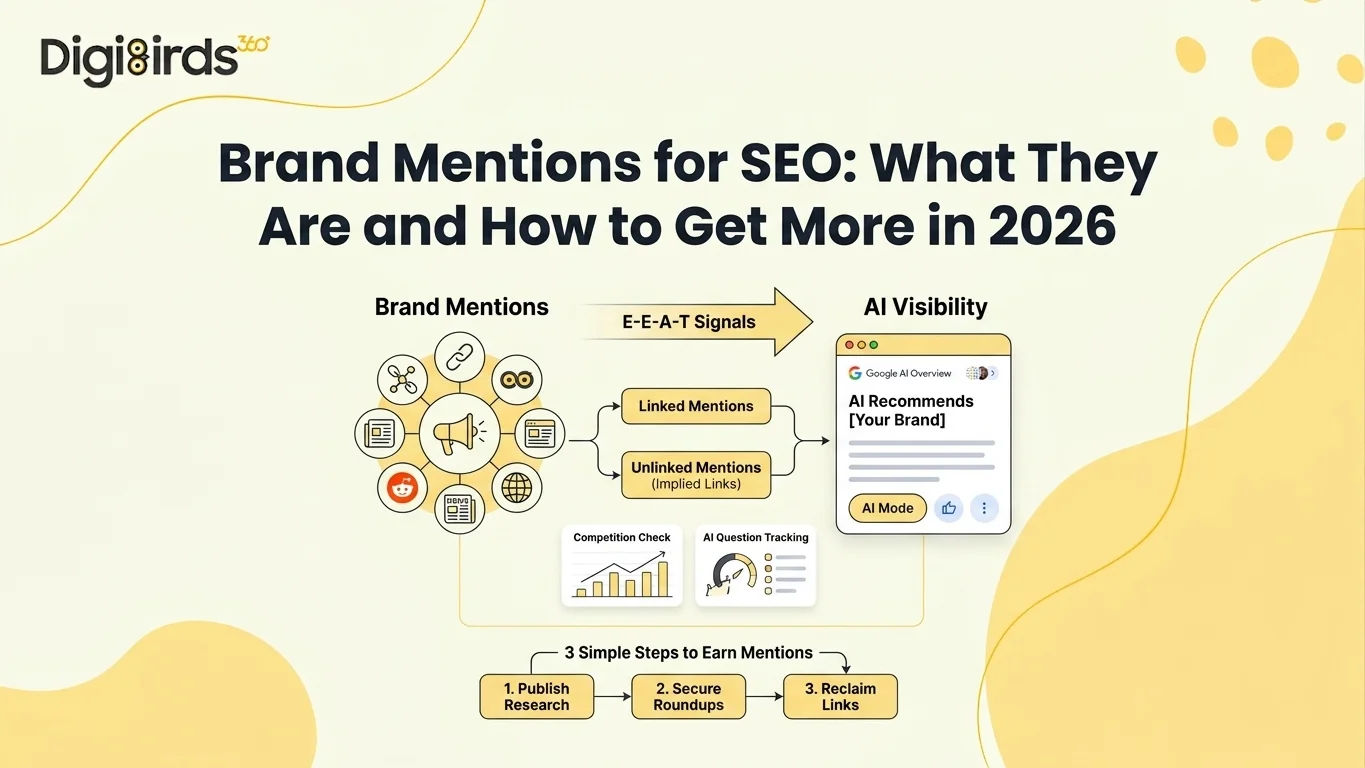
5. Build Brand Mentions Across the Web
AI models gather information from multiple sources, not just your website.
Key platforms influencing SEO for LLMs include:
- News websites
- Industry blogs
- Reddit and Quora discussions
- Review platforms
- Social media
The more credible mentions your brand receives, the stronger your large language model search engine optimisation signals become.
6. Optimise for Bing and Google
Many AI tools depend on existing search indexes.
For example:
- ChatGPT Search uses Bing’s index.
- Gemini relies heavily on Google’s ecosystem.
- Websites ranking on Bing page one are approximately three times more likely to be cited by ChatGPT.
This makes cross-engine optimisation essential for LLM SEO 2026.
7. Build Topic Clusters
Topic clusters establish authority within a specific domain.
A typical structure includes:
- A pillar page covering a broad topic in 2,000–3,000 words.
- 5–10 supporting articles addressing related subtopics.
This content architecture helps AI systems identify your website as an authority, improving LLM search ranking.
8. Optimise Visual and Multimedia Content
AI-powered search is increasingly multimodal. Images, videos, and diagrams contribute to large language model search engine optimisation.
Best practices include:
- Descriptive image filenames and alt text
- Compressed images under 100 KB
- Video transcripts and timestamps
- Original diagrams and infographics
Optimised multimedia increases visibility in AI-generated answers and visual search results.
Measuring LLM SEO Performance
Unlike traditional SEO metrics, LLM SEO 2026 success is measured using AI-specific indicators.
Key performance metrics include:
- Citation Frequency: Track how often your brand appears in AI responses for target queries.
- Share of Voice: Compare the number of AI mentions your brand receives versus competitors.
- AI Referral Traffic: Monitor visits originating from AI platforms such as ChatGPT, Perplexity, or Gemini.
- Sentiment Analysis: Evaluate whether AI responses describe your brand positively, neutrally, or negatively.
These metrics provide a more accurate understanding of LLM search ranking performance.
Future of LLM SEO
Several trends will shape LLM SEO 2026 in the coming years:
- Multimodal search integrating images, audio, and video.
- Personalised AI responses based on user behaviour.
- Real-time information retrieval through continuously updated data sources.
- AI search advertising integrated directly into AI-generated results.
Organisations that adapt to these changes early will gain a significant competitive advantage.
Conclusion
The emergence of AI-powered search platforms has transformed how users discover information online.
As ChatGPT, Gemini, and other AI tools become primary discovery channels, LLM SEO 2026 is rapidly becoming a critical digital marketing strategy.
By implementing effective SEO for LLMs, investing in large language model search engine optimisation, and consistently improving LLM search ranking, brands can maintain strong visibility across the next generation of search experiences.
For businesses seeking to stay ahead in this evolving landscape, Digibirds360 provides advanced AI-focused optimisation strategies designed to maximise brand visibility across both traditional and AI-driven search ecosystems.