
Google March 2026 Core Update Is Officially Complete
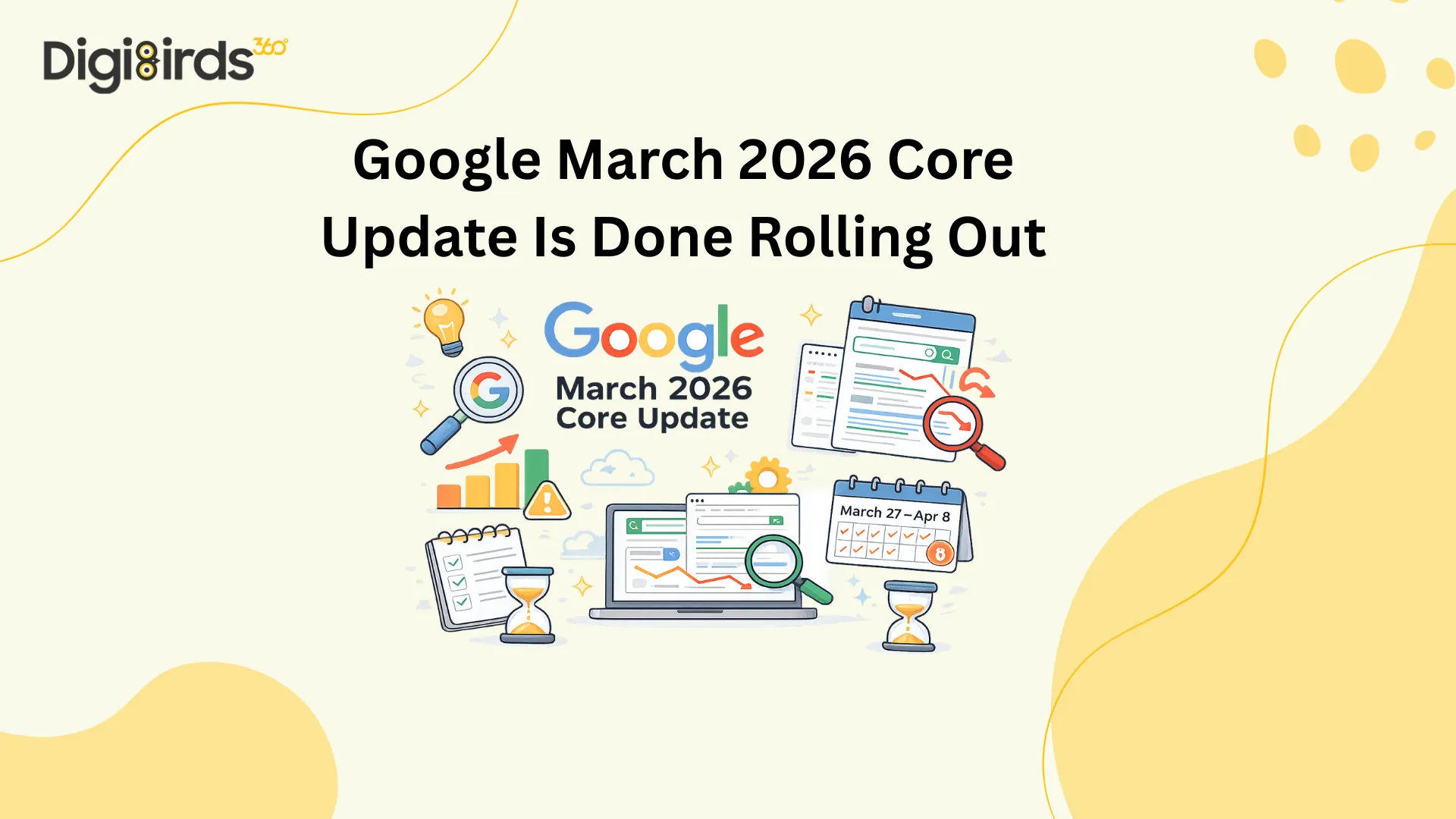
Google has officially wrapped up the March 2026 Core Update. It started rolling out on March 27 and completed on April 8, taking 12 days in total. If your website experienced unexpected dips or gains in traffic and rankings during that period, this update is very likely the cause.
Core updates tend to stir up a lot of questions and, in many cases, a fair bit of concern. So before you start making changes or drawing conclusions, here is a clear breakdown of what this update was about, how it compares to recent ones, and what you should actually do next.
The Rollout Timeline at a Glance
Google began rolling out the March 2026 Core Update on March 27, 2026. It completed on April 8, 2026, taking exactly 12 days from start to finish.
That pace makes it the second-fastest core update Google has released in recent memory. For context, the core updates we saw in 2025 took 14 days and 18 days respectively. Finishing in under two weeks signals a relatively controlled and contained rollout, though that does not mean the effects were minor.
What Is a Core Update, Exactly?
If you are new to following Google's algorithm changes, a core update is a broad adjustment to the main ranking systems that Google uses to evaluate and rank web content. It is not a penalty targeting specific sites for bad behavior. It is more like Google recalibrating its understanding of what counts as high-quality, relevant content.
Think of it this way: Google is constantly assessing millions of web pages. A core update is when it steps back, refines its criteria, and essentially re-ranks the web against those updated standards. Some pages go up. Some go down. Neither outcome necessarily reflects anything you did wrong or right in the short term.
Google described this update as a "regular update" aimed at surfacing content that is genuinely useful and relevant to searchers. It is a broad change to how the ranking systems assess content quality rather than a crackdown on any particular type of site or practice.
March 2026 Was a Very Busy Month for Google Updates
What makes this particular update interesting is the timing. It was the third confirmed update in roughly five weeks. Before the March 2026 Core Update, Google had already pushed out two other changes:
- A Discover-only core update in February 2026 that affected how content surfaced in Google Discover feeds. This one was narrower in scope and primarily impacted publishers who rely heavily on Discover traffic.
- A Spam Update on March 24 to 25, just days before the core update began. That was a fast-moving, targeted update aimed at low-quality and spammy content. If you saw a sudden drop right around March 24, that spam update may be worth looking into separately.
Having three updates stacked this closely together means it can be genuinely difficult to untangle which update caused what shift in your data. Keep that in mind as you start your analysis.
Should You Panic If Your Rankings Dropped?
No, and here is why.
A drop in rankings after a core update does not mean Google has penalised your site or flagged it for a policy violation. What it usually means is that Google's updated systems assessed competing content as more relevant or higher quality for certain queries. Your content did not necessarily get worse. Other content may simply have been reassessed as better.
That said, a ranking drop is worth paying attention to. Core updates often serve as useful checkpoints to evaluate how your content holds up against current quality standards. The questions worth asking are:
- Does your content genuinely answer what users are looking for, or does it skim the surface?
- Is the information accurate, well-sourced, and written by someone with real knowledge on the topic?
- Does your page provide a good experience, or are there issues with load speed, layout shifts, intrusive ads, or thin content?
If the answer to any of those is uncertain, that is your roadmap for improvement.
When Should You Start Analysing Your Data?
Google has a standard recommendation here: wait at least one full week after the rollout completes before drawing any conclusions from your traffic and ranking data.
That means holding off your analysis until at least April 15, 2026. The reason for this is that rankings and traffic can fluctuate significantly during and immediately after a rollout as Google's systems settle. Jumping to conclusions too early may lead you to react to noise rather than actual signal.
Once that window has passed, pull your data from Google Search Console, compare it against your pre-update baseline, and look for patterns in what moved and what did not. Are certain types of pages or topics affected more than others? Are the pages that gained rankings doing something differently?
What Can You Do If Your Site Was Negatively Affected?
First, take a breath. Core update recoveries are not always immediate. Google has confirmed in the past that improvements made to content after a core update may not be reflected until the next core update rolls out. That is not guaranteed, but it is common.
Here is a practical approach:
- Start with your biggest losers. Identify the pages that saw the steepest declines and audit them honestly. Read them the way a new visitor would and ask whether they are genuinely useful.
- Look at what is outranking you. Not to copy those pages, but to understand what Google is currently rewarding in that space. Is the content more thorough? More authoritative? Better structured?
- Focus on the fundamentals. E-E-A-T (Experience, Expertise, Authoritativeness, and Trustworthiness) remains the foundation of how Google evaluates content quality. If your content lacks clear authorship, first-hand experience, or factual depth, those are the areas to address.
- Be patient and methodical. Broad changes take time to work through. Document what you change and when, so you can connect the dots if and when your rankings recover.
The Bigger Picture for Site Owners in 2026
The frequency of updates in early 2026 tells you something important: Google is actively refining and iterating on its systems at a faster pace than before. Waiting for things to stabilise before making improvements is no longer a smart strategy.
The sites that tend to weather core updates well are not the ones gaming the algorithm. They are the ones consistently publishing content that users actually want, that demonstrates real knowledge, and that delivers a clean and straightforward experience.
If your site was untouched by this update, that is a good sign. If it was affected, treat it as useful feedback rather than a crisis.
Final Thoughts
The Google March 2026 Core Update is now complete. It took 12 days, came in as one of the faster rollouts in recent years, and landed in the middle of a particularly active stretch of algorithm activity. Whether your site went up, down, or stayed flat, the guidance remains the same: focus on content quality, wait for the data to settle, and audit methodically before making major changes.
At DigiBirds360, we track these updates closely so you do not have to piece it together from a dozen different sources. If you have questions about how this update may have affected your site or want help reviewing your content strategy, get in touch with our team.