

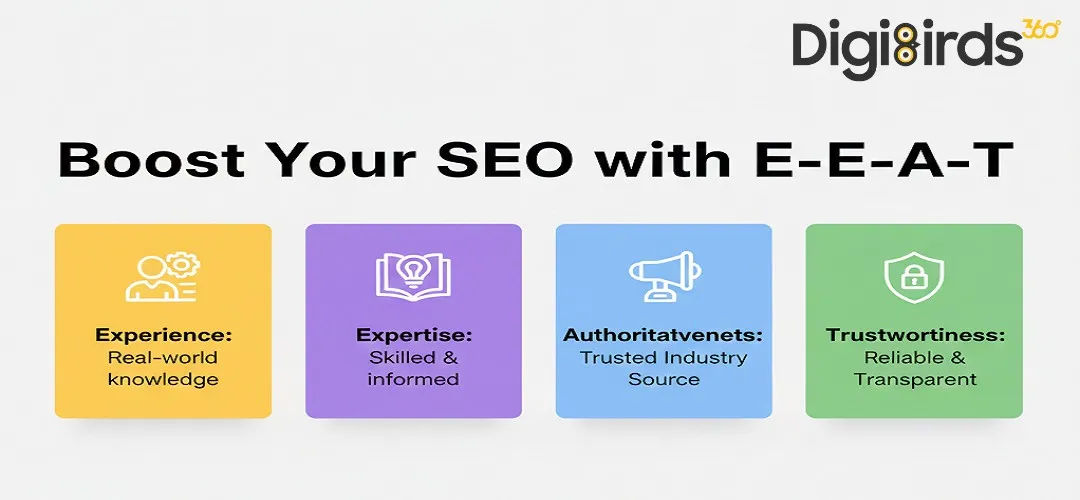
What Is E-E-A-T?
Search engine optimization is no longer just about keywords and backlinks.
As search engines become more sophisticated, they increasingly prioritise content quality, credibility, and trust.
This shift has brought E-E-A-T to the forefront of modern SEO strategies.
E-E-A-T stands for Experience, Expertise, Authoritativeness, and Trustworthiness.
While it is not a direct ranking factor with a measurable score, it plays a crucial role in how search engines evaluate content quality and decide which pages deserve visibility in search results.
This article explains what E-E-A-T is, why it matters for SEO, how it differs from E-A-T, and how you can improve it across your website.
What Is E-E-A-T?
E-E-A-T is a content quality framework used by Google to assess how reliable and helpful a webpage is for users.
It originates from Google’s Search Quality Rater Guidelines, which are used by human evaluators to judge the quality of search results.
Originally, Google focused on E-A-T.
In recent updates, an extra “E” for Experience was added to emphasise the importance of first-hand knowledge.
This reflects Google’s goal of rewarding content created by people who have actually used, tested, or worked with the subject they are writing about.
Breakdown of the E-E-A-T Components
Experience
Experience refers to first-hand involvement with the topic.
It answers whether the content creator has actually done what they are talking about.
Examples include:
- A product review written after using the product
- A service guide written by someone who has delivered that service
- A case study based on real campaign results
Content that demonstrates experience tends to feel more practical, authentic, and useful, especially for searches where users want real-world advice.
Expertise
Expertise measures the depth of knowledge and skill behind the content.
This can come from formal education, professional experience, or long-term involvement in a field.
Expertise matters most when accuracy is critical, such as:
- Finance and investment topics
- Medical or health information
- Legal guidance
- Technical or engineering subjects
Showing expertise can include author credentials, professional background, certifications, or consistently accurate and in-depth explanations.
Authoritativeness
Authoritativeness reflects how recognised and respected the author or website is within its niche.
It is built over time through reputation.
Strong authority signals include:
- Mentions from reputable websites
- High-quality backlinks
- Industry recognition
- Strong brand presence and consistency
A website becomes authoritative when others trust it as a reliable source of information.
Trustworthiness
Trustworthiness is the foundation of E-E-A-T.
It focuses on whether users can rely on the content and the website behind it.
Key trust signals include:
- Accurate and up-to-date information
- Transparent author and business details
- Secure website infrastructure (HTTPS)
- Clear contact information and policies
- Honest claims supported by sources
Without trust, the other E-E-A-T components lose their impact.
Why E-E-A-T is Important for SEO
Although E-E-A-T is not a direct ranking signal like backlinks or page speed, it strongly influences how Google’s systems evaluate content quality.
Better Alignment with Search Intent
Content that demonstrates experience and expertise tends to answer user queries more effectively.
This improves engagement, satisfaction, and perceived usefulness.
Influence on Algorithm Updates
Google uses feedback from quality raters to refine its algorithms.
Pages that consistently meet E-E-A-T standards are more likely to benefit from core and helpful content updates.
Higher Trust and Conversions
Trustworthy content builds confidence.
Users are more likely to engage, convert, and return to websites they believe are credible.
Stronger Link-Earning Potential
Authoritative, experience-driven content naturally attracts backlinks, which remain one of the strongest SEO signals.
How to Improve E-E-A-T for SEO
Content Improvements
High-quality content is the foundation of E-E-A-T.
Focus on accuracy, depth, and real-world experience by using original insights, data, and examples.
Keep content up to date, answer search intent clearly, and include FAQs for clarity.
- Write original, experience-based content
- Include real examples, case studies, and insights
- Keep information accurate and updated
Author and Brand Signals
Clearly show who created the content and why they are qualified.
Add detailed author bios, credentials, and links to professional profiles.
Strengthen brand signals through an informative About page, consistent brand mentions, and transparent contact details.
- Add detailed author bios
- Highlight qualifications and experience
- Strengthen About and Contact pages
Technical and Trust Signals
A secure, well-structured website supports E-E-A-T.
Use HTTPS, improve page speed, and ensure mobile responsiveness.
Add clear privacy policies, terms, and refund information where applicable.
Implement structured data, fix broken links, and maintain clean site architecture to enhance credibility and user confidence.
- Use HTTPS and secure infrastructure
- Display clear privacy and editorial policies
- Implement structured data for authors and organisations
Off-Page Signals
External validation plays a major role in E-E-A-T.
Earn backlinks from authoritative and relevant websites, secure brand mentions, and encourage genuine reviews.
Active engagement on trusted platforms and citations from reputable sources reinforce authority.
- Earn backlinks from reputable sources
- Build brand mentions and reviews
- Maintain consistency across directories and platforms
Discover how DigiBirds 360 empowers brands with powerful SEO Services.
Learn more about who we are.
What’s the Difference Between E-E-A-T and E-A-T?
The difference between E-A-T and E-E-A-T is the addition of Experience.
E-A-T focuses on knowledge, reputation, and reliability.
E-E-A-T goes one step further by asking whether the content creator has real-world, first-hand experience with the topic.
In simple terms:
- E-A-T proves you know the subject.
- E-E-A-T proves you have actually done it.
This distinction is especially important for product reviews, how-to guides, service comparisons, and advice-driven content, where lived experience adds credibility that pure theory cannot.
E-E-A-T and YMYL Content
YMYL (Your Money or Your Life) content includes topics that can directly impact a person’s health, finances, safety, or well-being.
Examples include:
- Medical advice
- Financial planning
- Legal information
- Safety-related guidance
For YMYL topics, Google applies much higher E-E-A-T standards.
Content in these areas must be accurate, well-sourced, and created by qualified or experienced individuals to avoid harming users.
Have Questions? Contact DigiBirds360 and Speak to a Digital Growth Specialist Today!
Conclusion
E-E-A-T plays a vital role in search engine optimization by aligning content quality with user trust and credibility.
While it does not function as a direct ranking factor, it influences how search engines evaluate usefulness, authority, and reliability.
By focusing on experience, expertise, authoritativeness, and trustworthiness, businesses and publishers can create content that not only ranks better but also builds lasting trust with their audience.