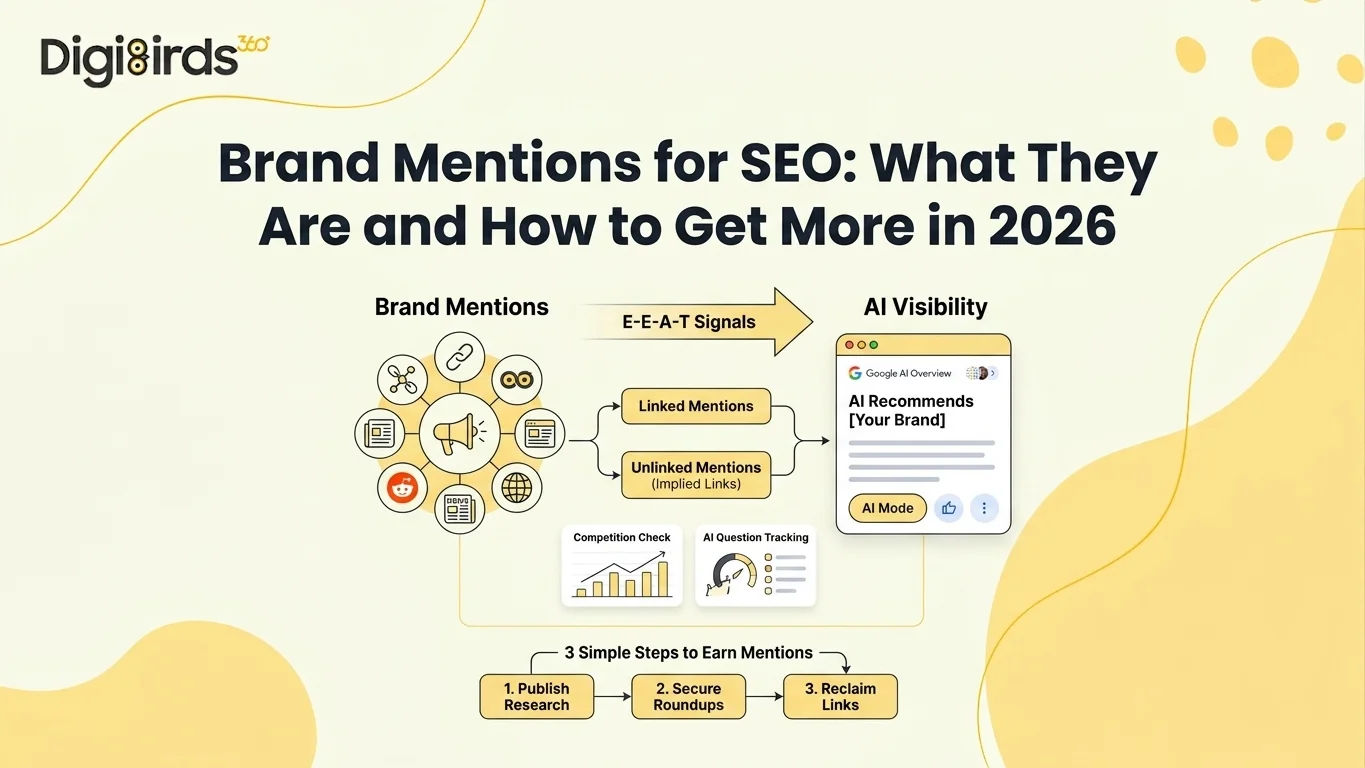
You know that feeling when people talk about you behind your back, but in a good way? That's basically what a brand mention is for your business online. Someone writes about you, talks about your product, or just drops your company name in a blog or a forum, and even when they don't link to your site, it still counts for something.
For years SEO was all about backlinks. Get enough links pointing to your site and you'd climb the rankings. That's still partly true, but things have moved on. Search engines and AI tools now pay close attention to how often your name comes up across the web, links or no links. So if brand mentions have been sitting at the bottom of your to-do list, this is the year to bump them up.
Let me walk you through what they actually are, why they matter so much now, and how you can get more of them without burning through your budget.
What Are Brand Mentions?
A brand mention is any reference to your company, product, executive, or even your tagline anywhere online. Could be a tweet, a Reddit comment, a news article, a YouTube description, or a review on some site you've never visited. If your name shows up in it, that's a mention.
There are a few types worth knowing. The most common split is linked vs unlinked. A linked mention includes a clickable URL back to your website, which is the classic backlink everyone's been chasing forever. An unlinked one just names you, no link attached. Funny thing is, Google increasingly treats those unlinked mentions as "implied links," so they still pass some authority your way.
Then there's direct vs indirect. Direct is when someone types out your exact brand name. Indirect could be a misspelling, just your product name, or your slogan being used without the brand attached. And then you've got implied mentions, where somebody describes your product without naming it at all, like calling something "the yellow chip bag." Search engines and AI are getting weirdly good at connecting those dots.
One more layer that people forget: mentions come in positive, negative, and neutral flavors. A glowing review helps you. An unanswered complaint can quietly hurt you. And a plain directory listing just sits there neutral. All three matter when you're keeping track.
Why Brand Mentions Matter More Than Ever
Here's the short version. Search engines and large language models use mentions to figure out how relevant and trustworthy you are in your niche. Brand mentions have moved from a nice-to-have tactic to core infrastructure in an AI search environment. They feed straight into your E-E-A-T signals, which is just a fancy way of saying experience, expertise, authority and trust.
What's really changed lately is AI. When ChatGPT, Perplexity, Google AI Overviews, or Google AI Mode reference your brand inside an answer, that's a mention—and it's becoming the single most valuable surface in all of search. People aren't always scrolling through ten blue links anymore. They ask an AI a question and trust whatever names it gives back. If your brand keeps popping up in those answers, you win. If it doesn't, you're basically invisible no matter how slick your website is.
Beyond rankings, mentions help you keep an eye on your reputation. You get to see whether people are saying nice things or complaining, and you can step in before a small grumble snowballs into a real mess. They also let you peek at competitors and spot the gaps where they're getting talked about and you aren't.
How to Track Your Brand Mentions
Before you can earn more mentions, you've got to know where you stand right now. And honestly, most businesses have no real clue how often they're being talked about, which is a bit of a problem.
Set Up Monitoring Tools
Start simple. Google Alerts is free and a fine place to begin. To set up Google Alerts, visit alerts.google.com and create alerts for your brand name, key products, and executive names. Put quotation marks around your exact brand name and add a couple of variations, including the misspellings people always type.
If you want something with more muscle, paid tools like Brand24, Sprout Social, Semrush's Brand Monitoring, or newer ones like Alertmouse track mentions across social media, blogs, news, and forums in one dashboard. Set up tracking for your brand name, your products, your founders' names, and yeah, those annoying misspellings again.
Audit Your AI Visibility
This bit is newer but really matters now. Pick five to ten questions your customers might actually ask an AI, then go type those prompts into ChatGPT or Perplexity and see if your brand shows up. If your competitors keep appearing and you don't, well, there's your gap staring right back at you. Do this roughly once a month, because it shifts fast.
Check the Sentiment
Once mentions start rolling in, sort them by tone. Positive feedback tells you what's working. Negative stuff flags problems early so you can jump on them. And spam, you just filter that out. The whole point is to separate the useful chatter from the noise so you act on the right things.
Not All Mentions Are Equal
Quick but important point. It's tempting to chase volume, but a single mention from a trusted industry site is worth way more than ten random shoutouts on sketchy pages nobody reads. When you're weighing a mention, look at the source's authority, whether it's actually relevant to your niche, the sentiment, and roughly how many people will see it.
There's also this idea of share of voice, which is just how often your brand comes up compared to your competitors. If they're being mentioned five times for every one of yours, that tells you exactly where the work is. Track it over a few months and you'll see whether you're closing the gap or falling behind.
Simple Ways to Earn More Mentions
Tracking is half the job. Now let's get you talked about more.
The most reliable trick is publishing original research. If you run a survey or pull together some industry data nobody else has, journalists and bloggers will cite you as the source. People love linking to original numbers, and it gets your name out there over and over without you doing much.
Another one that works well is going after product roundups. Search for those "best 10 tools for X" type posts in your space. If you're missing from the list, email the writer and politely explain why your product earns a spot. Doesn't always land, but when it does, it's gold.
And don't sleep on unlinked mentions you already have. Remember how an unlinked mention still helps? Well, you may as well ask for the link too. Reach out to whoever mentioned you with a quick, friendly note asking if they'd add a link so readers can find you. It's low effort, and a surprising number of people just say yes. This is what folks call link reclamation, and it's about the easiest win in SEO.
Where Most Businesses Slip Up
A few common mistakes are worth flagging so you can dodge them. The biggest one is only tracking tagged social posts and direct reviews, which leaves you blind to all the chatter happening on forums, Reddit, blogs, and inside AI answers. Another is letting negative mentions sit there unanswered, which does more damage the longer it lingers. And plenty of businesses never bother checking their competitors at all, so they miss obvious opportunities. Just being aware of these puts you ahead of most.
A Few Tips Before You Dive In
Consistency beats intensity here. One big spike of mentions won't do much, but steady, ongoing references build real authority over time. Keep your business info identical everywhere too, same name, same details, because AI systems get confused by conflicting information, and that works against you.
Also, reviews matter more than people think. They act as third-party proof that you're the real deal, and AI tools lean on them heavily when deciding which brands to recommend. So nudge your happy customers to leave a review. It all adds up.
Wrapping It Up
Brand mentions aren't some optional extra anymore. They're a core part of getting found in 2026, whether through Google or through whatever AI tool your customer happens to use that day. Start by tracking where you're being mentioned, fix the gaps, focus on quality over raw numbers, and then put a bit of steady effort into earning more through research, outreach, and reviews. It's not complicated; it just needs regular attention.
If you'd like a hand setting all this up, or you just want a proper strategy built around your brand, the team at DigiBirds360 would be glad to help you get more visible online. Swing by and have a look at what we do.